
Part of Orthopaedics
Websites and marketing for private foot and ankle surgeons
Alchemy medical builds websites and runs SEO, content and video for private foot and ankle surgeons in the UK. We write pages on bunion surgery, ankle arthroscopy, Achilles problems and ankle replacement that give patients the recovery times, risks and costs they look for, with sources. Every page follows GMC and ASA rules.
What patients type into Google
Monthly UK Google searches for four foot and ankle conditions. The big numbers are mostly people looking up a condition. Searches closer to booking, such as bunion surgery recovery time or bunion surgery cost UK, are smaller, and each one needs its own page.
Monthly UK searches. Source: Google Ads and DataForSEO Labs, pulled 30 September 2026. Google publishes no figure for plantar fasciitis treatment (checked 9 October 2026).
What do patients search for before choosing a foot and ankle surgeon?
These are the searches patients make once surgery is on the table. Each group needs pages that answer them.
Bunions (hallux valgus)
Bunion surgery recovery time, minimally invasive bunion surgery, bunion surgery cost UK, when can I drive after bunion surgery.
Ankle injuries
Ankle ligament reconstruction, ankle arthroscopy recovery, recurrent ankle sprains.
Achilles
Achilles tendinopathy treatment, Achilles rupture surgery or non-surgical treatment.
Arthritis
Ankle fusion or ankle replacement, big toe arthritis (hallux rigidus) surgery.
Nerve and forefoot pain
Morton’s neuroma treatment, plantar fasciitis injections.
Each answer needs a recovery range, the main risks and a source.
Why is foot and ankle surgery hard to market online?
Patients can’t tell surgeon types apart
Orthopaedic foot and ankle surgeons and podiatric surgeons both offer bunion surgery, and their training is different. That difference isn’t obvious to patients. Your site should state your qualifications and GMC specialist registration plainly, without criticising other professions.
Minimally invasive claims attract scrutiny
Minimally invasive bunion surgery is widely advertised with claims about smaller scars and faster recovery. Those are efficacy claims, and repeating them without evidence invites an ASA complaint.
Recovery questions come first
Patients want to know about time off work, driving, footwear and how long swelling lasts. Pages that skip these send them to forums and hospital group sites for the answers.
Cost comes up early
Many self-pay patients look at price before they look at surgeons. Clear fees cut down enquiries from people who were never going to book.
The numbers behind the approach
76% of Google AI Overview citations come from pages already in Google’s top 10. Source: Ahrefs.
What does Alchemy medical do for foot and ankle surgeons?
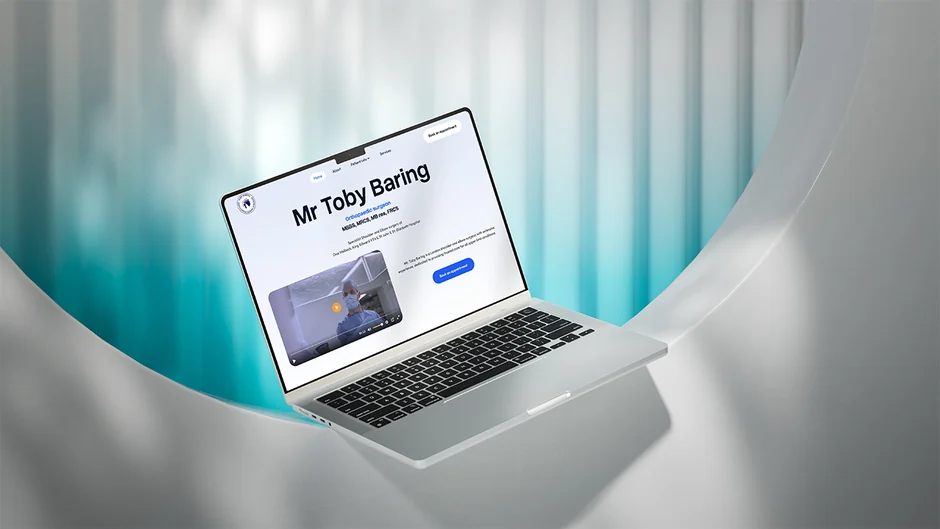
Website design and build
A page for each condition and procedure you treat, bunions and ankle replacement included, written around what patients search for.
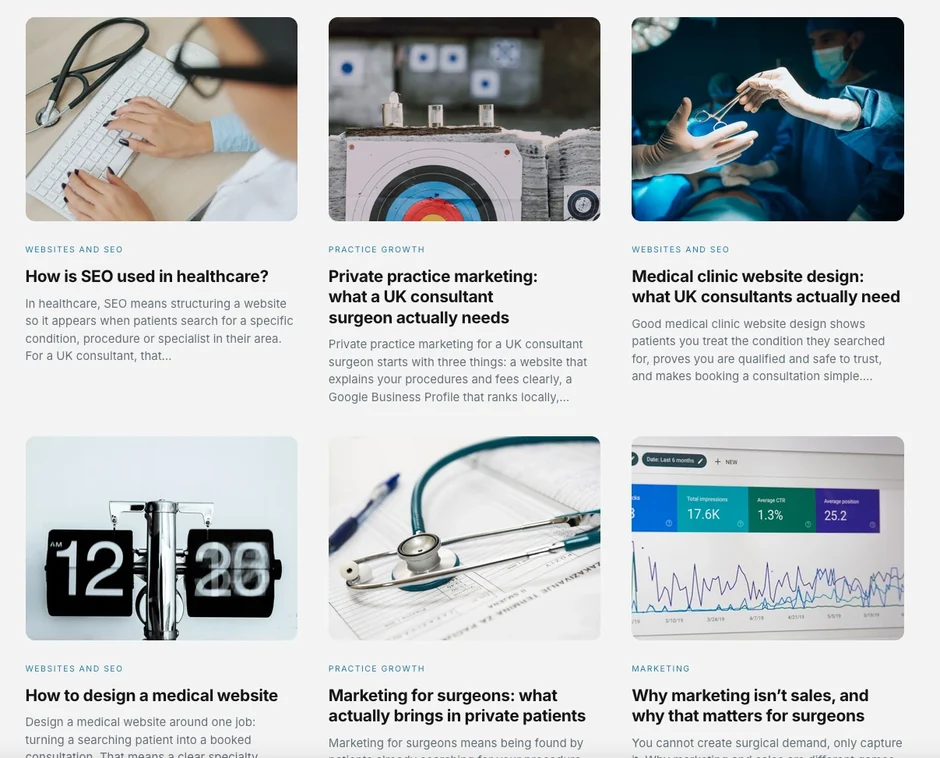
SEO and content
Monthly blog posts answering the recovery, cost and treatment-choice questions above. We draft them and you approve them.
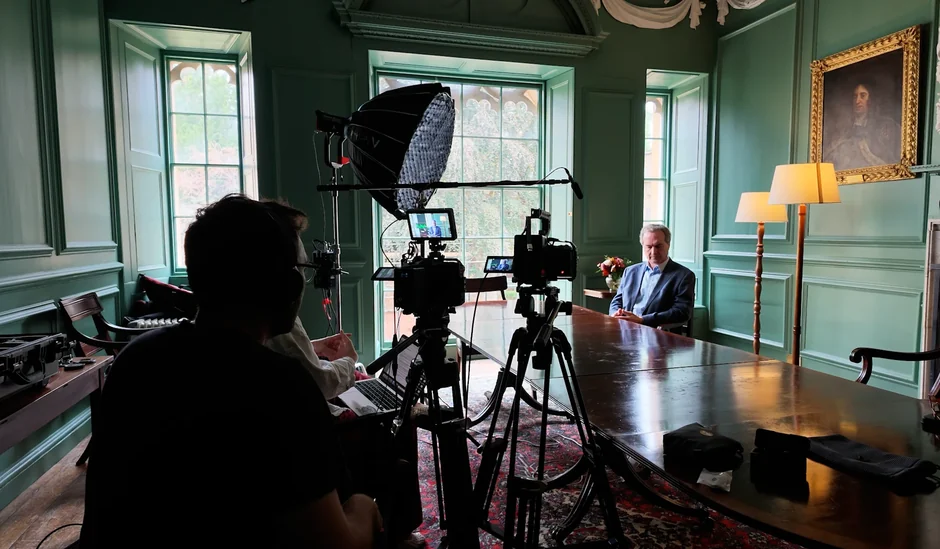
Video and photography
Short explainers, such as what happens on the day of bunion surgery. They can go on YouTube too, which Ahrefs found is the most-cited domain in Google AI Overviews.
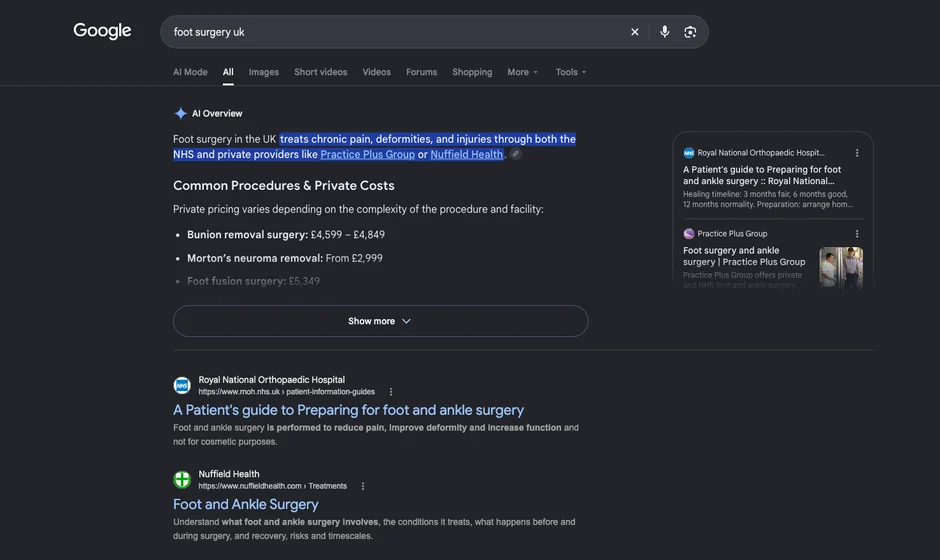
Directory and AI visibility
Your details kept the same across Bupa Finder, Doctify, Top Doctors, insurer directories and Google Business Profile.
Monthly reporting
Visitors, enquiries and the searches that brought them, in plain English.
What compliance rules apply to foot and ankle marketing?
Foot and ankle pages follow the same GMC and ASA rules as all medical advertising. Three of them come up often.
- Minimally invasive claims. Smaller scars and faster recovery are efficacy claims, so they need published evidence. NICE interventional procedures guidance (IPG332) covers minimal access techniques for correcting bunions, and we cite it where it’s relevant.
- No outcome promises. We never write that a patient will be pain-free or back in normal shoes by a set date. Recovery is given as a range, with its source.
- Before and after photos. Foot photos need the same patient, angle, lighting and background, with dates and written consent on file. If any of that is missing, we don’t use them.
What this looks like when it works
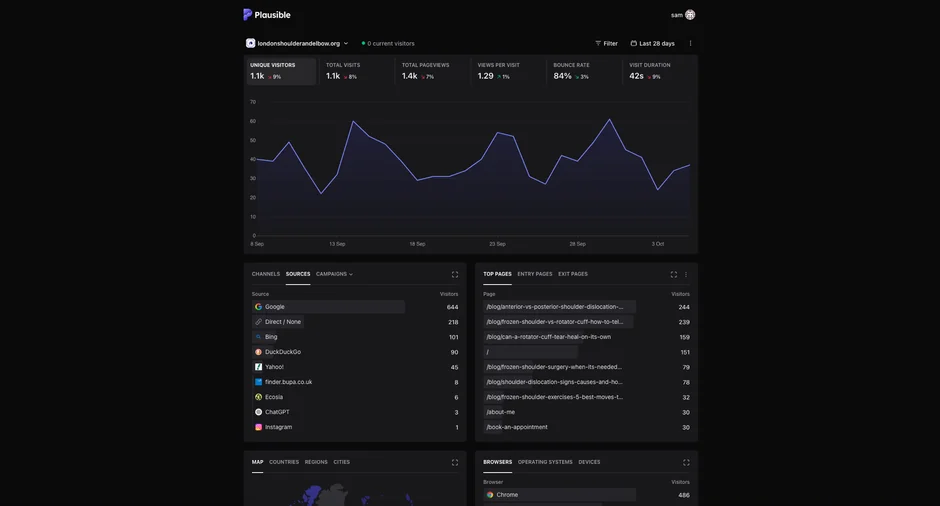
Mr Toby Baring, Consultant Orthopaedic Surgeon, shoulder and elbow, London. New website, video and SEO. Monthly visitors grew from 161 to over 1,000, and the site has brought in more than 70 patient enquiries.
Frequently asked questions
How can a foot and ankle surgeon get more self-pay patients online?
Publish detailed pages for the conditions patients search for most, such as bunions, Achilles problems and ankle arthritis, and give recovery times, risks and fees on each. Keep your details the same across directories and add new content every month. Self-pay patients are spending their own money, so expect them to read closely before they book.
Should a foot and ankle surgeon publish prices on their website?
A price range for common procedures such as bunion surgery helps self-pay patients decide whether to get in touch, and it filters out people with a different budget. Say what the price includes: consultation, surgery, hospital fees and follow-up. It can’t include a discount or a time-limited offer.
How do I explain the difference between an orthopaedic and a podiatric surgeon on my website?
State your training and your GMC specialist registration in trauma and orthopaedic surgery as facts. Don’t compare yourself with podiatric surgeons or suggest they’re less safe, because that’s a comparative claim you’d need evidence for. Clear qualifications let patients draw their own conclusions.
Can I say my bunion surgery is minimally invasive?
Yes, if it’s accurate and any benefit you claim, such as smaller scars or faster recovery, is backed by published evidence. Name the technique and link to the source. Don’t suggest it suits every patient, and set out its risks next to its benefits.
Do you write content about both surgical and non-surgical treatment?
Yes. Patients searching for Achilles or plantar fasciitis treatment often want to try non-surgical options first. Covering injections, physiotherapy and footwear advice alongside surgery gives them a balanced picture of their options, which is what GMC guidance expects.
See what your site is missing
Book a free strategy call, or ask us to audit your current website.
Book a free strategy call